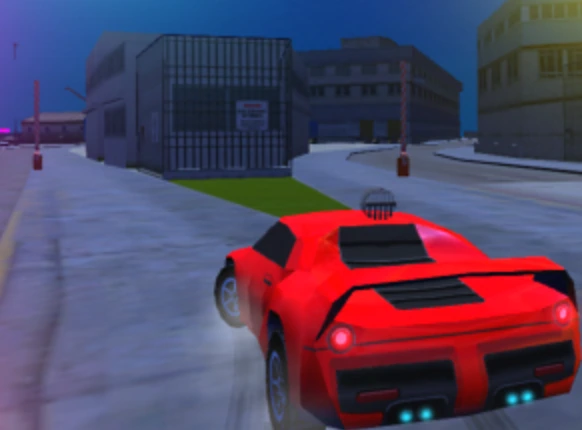
GTA Vice City Game History: The Story Behind the 1986 Classic
How a follow-up to GTA III became the most fondly remembered game in the series - the setting, the people who made it, the music that carried it, and the long road that ended with Vice City running in a browser tab two decades later.
- Vice City in 1986: the setting
- How the game was made
- Why 1980s Miami shaped everything
- The open-world design
- Characters: Tommy Vercetti and the cast
- The vehicles
- Music and radio stations
- Missions and the story arc
- Secrets and hidden packages
- Why Vice City became a classic
- Vice City in the modern era
- Vice City vs GTA III: what changed
- Re-releases and the Definitive Edition
- Legacy and influence
- Frequently asked questions
Vice City in 1986: the setting
Vice City is a fictional coastal metropolis modelled closely on Miami, and the game is set in 1986 - a specific year chosen rather than a vague "eighties". That precision does a lot of work. 1986 is the peak of the decade's visual identity: pastel suits, neon signage, chrome-and-glass architecture, and a cocaine-driven economy that the game's plot leans on directly.
The city itself is built as two main islands, with beaches, downtown districts, ports, a military base and a swampy western area. The starting island is deliberately small, and the bridges to the mainland are closed at the beginning by a hurricane warning - a design decision that works as both a story device and a tutorial, since it forces you to learn the first island properly before the map opens up.
How the game was made
Grand Theft Auto: Vice City was developed by Rockstar North and published by Rockstar Games. It was released on the PlayStation 2 on 29 October 2002, roughly a year after GTA III, with the PC version following in 2003.
That timing matters. The studio had just shipped a game that reinvented the open-world genre, and rather than build something entirely new, it took the GTA III engine and used it to make a game with far more personality. The result was a faster development cycle than a ground-up sequel would have allowed, which is part of why the two games feel so closely related underneath.
The most significant technical change was the addition of voice acting for the protagonist. GTA III's Claude was silent; Tommy Vercetti speaks throughout, which shifted the series from a game about a city to a game about a person in a city.
Why 1980s Miami shaped everything
Vice City's influences are unusually visible for a game of its era. Three in particular are impossible to miss:
- Scarface (1983) - the immigrant-turned-kingpin arc, the mansion, the final shootout. The game's story structure follows it closely.
- Miami Vice - the television series that defined how the decade looked. The pastel palette and the soundtrack-driven pacing come straight from it.
- Carlito's Way - the ex-con trying to go straight and failing, which is the shape of the opening act.
Setting a game in a specific, culturally loaded place and time gave the art team something to build towards. Rather than inventing a city from nothing, they were recreating a look that players already had a feeling about - and the game is largely remembered for how well it captured that feeling.
The open-world design
Vice City's map is smaller than the games that followed it, and that turned out to be a strength. A denser city means more recognisable landmarks, shorter drives, and a stronger sense of place than a sprawling map with long empty stretches.
The mission structure reflects the setting too. Where later games in the series leaned on property ownership as a side system, Vice City makes it central: buying businesses, completing their missions and collecting daily income is the mechanism that drives the entire second half of the story. The full mission list shows how tightly that structure gates the finale.
Characters: Tommy Vercetti and the cast
Tommy Vercetti is a mafia enforcer released from prison after fifteen years and sent to Vice City by his old boss, Sonny Forelli. The deal he is sent to oversee is ambushed, and the rest of the game is him working out who set him up while building enough of an empire to survive.
The supporting cast is what people remember, and it is deliberately broad - a corrupt lawyer, a Colombian drug lord, a retired colonel, a property developer, a biker gang leader, a Cuban gang boss, a Haitian voodoo priestess, a one-armed arms dealer and a rock band. Each one anchors a section of the map and a set of missions, which keeps the story moving between very different parts of the city.
The vehicles
The vehicle list is a period piece in itself: sports cars, muscle cars, sedans, vans, buses, motorbikes, boats, helicopters and light aircraft. Two stand out in memory:
- The Infernus - the game's flagship sports car and the car most players remember.
- The Rhino - the military tank, normally impossible to obtain without using the panzer cheat code, and the reason that code is one of the most searched in the whole series.
Vehicle handling was tuned per vehicle class rather than shared, which is why the difference between a heavy van and a sports car is felt immediately.
Music and radio stations
The soundtrack is arguably the single biggest reason Vice City is remembered as fondly as it is. The game licensed a large catalogue of genuine 1980s tracks and organised them into in-game radio stations, each with its own DJ, adverts and identity:
- Flash FM - pop and chart hits
- Wave 103 - new wave and synth-pop
- V-Rock - rock and metal
- Fever 105 - soul and R&B
- Emotion 98.3 - power ballads and soft rock
- Radio Espantoso - Latin music
- K-Chat and VCPR - talk radio, including the interview shows that became a series trademark
Driving around the city with the radio on is the core loop of the game in a way that is easy to underestimate. The music is not background - it is the pacing.
Missions and the story arc
The story runs in four stages: the ambushed deal and the closed-bridge opening act, bringing down the drug lord who organised the ambush, building an empire out of purchased businesses, and the final confrontation with Sonny Forelli. The complete mission list covers every mission in order, including who gives it and what unlocks when.
Secrets and hidden packages
Vice City established a lot of the collectible conventions the series still uses. Hidden packages are scattered across the map - collecting them unlocks weapons that spawn at your safehouses, so they are genuinely useful rather than just a completion statistic. Alongside them there are unique stunt jumps, rampages and a set of side jobs that each have their own rewards.
Getting to 100 percent completion requires all of it, which is why the game still has an active completionist community more than two decades later.
Why Vice City became a classic
A few things came together:
- It had a point of view. Most open-world games of the era were generic urban settings. Vice City committed fully to one place and one decade.
- It was funny without being a joke. The satire lands because the world is played straight.
- The music carried it. A licensed 1980s soundtrack was a genuine risk at the time and it defined the experience.
- It was the right size. Dense rather than sprawling, which keeps the whole map memorable.
Vice City in the modern era
The game has had a long second life. It was re-released on later consoles, and a remastered version arrived as part of the Definitive Edition collection in 2021, which divided opinion but kept the game in circulation.
The more interesting development for anyone reading this is technical. Independent developers reverse-engineered the game's original source and produced open-source reimplementations of the engine. Because that work targets the original game logic rather than a specific console, it can be compiled to run in a web browser through WebAssembly - which is exactly how the browser edition on this site works. Assets stream to your browser as you play instead of being installed, and the setup guide covers what that means in practice.
The road there has not been smooth. The browser ports have been taken down and restored more than once following takedown requests, which is why availability can change. That history is also why this site is clear about what it is: an independent fan resource, not an official Rockstar or Take-Two product, as set out in our disclaimer.
Vice City vs GTA III: what changed
Vice City is built on the same engine as GTA III, released just a year earlier, and comparing the two is the clearest way to see what the studio actually added.
| Element | GTA III (2001) | Vice City (2002) |
|---|---|---|
| Setting | Liberty City, present day | Vice City, 1986 |
| Protagonist | Claude - silent | Tommy Vercetti - fully voiced |
| Soundtrack | Original score and a smaller radio selection | Large licensed 1980s catalogue across dedicated stations |
| Property ownership | Minimal | Central mechanic driving the whole second half of the story |
| Vehicles | Cars, boats, one helicopter | Adds motorbikes, seaplanes and more aircraft |
| Combat | Basic lock-on | Improved aiming and melee variety |
| Map size | Larger, more spread out | Smaller but denser and more distinctive |
The pattern is consistent: Vice City did not reinvent the formula, it added personality and one genuinely structural new system in the form of asset ownership. That is a large part of why it is remembered more warmly than the game it was built on.
Re-releases and the Definitive Edition
Vice City has been re-released several times, and the versions are worth knowing apart:
- PlayStation 2 (2002) - the original release, and the version the game's reputation was built on.
- PC (2003) - the version most people still think of when they picture keyboard controls and typed cheat codes.
- Xbox (2003) - a port with improved visuals for the time.
- Mobile (2012) - a touch-screen adaptation, which is where the idea of on-screen controls for Vice City first became familiar.
- Definitive Edition (2021) - a remastered collection that rebuilt the visuals. It kept the underlying game logic, so the mission structure and cheat system remain recognisably the same.
Each re-release has its own quirks, and the Definitive Edition in particular divides opinion among long-time players. What matters for browser play is that the version running here is built on the original game logic, not on a remaster.
Legacy and influence
Vice City's influence shows up in two places.
In the series itself, it set the template of anchoring each game to a specific era and place with a licensed soundtrack built around it. Later entries all follow that structure, and the radio station format Vice City popularised is still a defining feature of the games.
Outside the series, it is one of the games that made a strong case for period settings in open-world design. The idea that a game can commit to a specific cultural moment - rather than a generic modern city - and be better for it is one Vice City demonstrated convincingly, and it is why the game is still being discussed, re-released and reverse-engineered more than twenty years later.
Frequently asked questions
When did GTA Vice City come out?
It was released on the PlayStation 2 on 29 October 2002. The PC version followed in 2003, with an Xbox release later that year.
Who developed GTA Vice City?
It was developed by Rockstar North and published by Rockstar Games, the same studio behind GTA III the previous year.
What year is GTA Vice City set in?
1986. The game deliberately picks one specific year rather than a vague 1980s setting, which is why the fashion, music and cars all sit at a consistent point in the decade.
Is Vice City based on Miami?
Yes. Vice City is a fictional city modelled closely on Miami, and the game draws heavily on 1980s Miami pop culture including Scarface, Miami Vice and Carlito's Way.
Why is Vice City so well remembered?
Three reasons come up repeatedly: it committed fully to a specific time and place, it had a licensed 1980s soundtrack organised into in-game radio stations, and its map was dense rather than sprawling, which made the whole city memorable.
How did GTA Vice City end up playable in a browser?
Independent developers reverse-engineered the original game engine and produced open-source reimplementations. That work can be compiled to WebAssembly, which lets the game run in a browser with assets streamed as you play rather than installed.
Is this browser version official?
No. It is an independently run fan resource and is not affiliated with, endorsed by or produced by Rockstar Games or Take-Two Interactive.
What is the difference between GTA III and Vice City?
Vice City was built on the GTA III engine a year later. It added a fully voiced protagonist, a large licensed 1980s soundtrack, motorbikes and aircraft, and made property ownership a central story mechanic rather than a side system.
What platforms has GTA Vice City been released on?
PlayStation 2 in 2002, PC and Xbox in 2003, mobile devices in 2012, and as part of the Definitive Edition remastered collection in 2021.
What radio stations are in GTA Vice City?
Flash FM, Wave 103, V-Rock, Fever 105, Emotion 98.3, Radio Espantoso, plus the talk stations K-Chat and VCPR. Each has its own DJ, adverts and musical identity.
Who voices Tommy Vercetti?
Tommy Vercetti is voiced by Ray Liotta. He was the first voiced protagonist in the series, following the silent Claude in GTA III.
How many copies did GTA Vice City sell?
It was one of the best-selling games of the PlayStation 2 generation and has been repeatedly re-released since, which is part of why the game is still widely played and discussed today.